
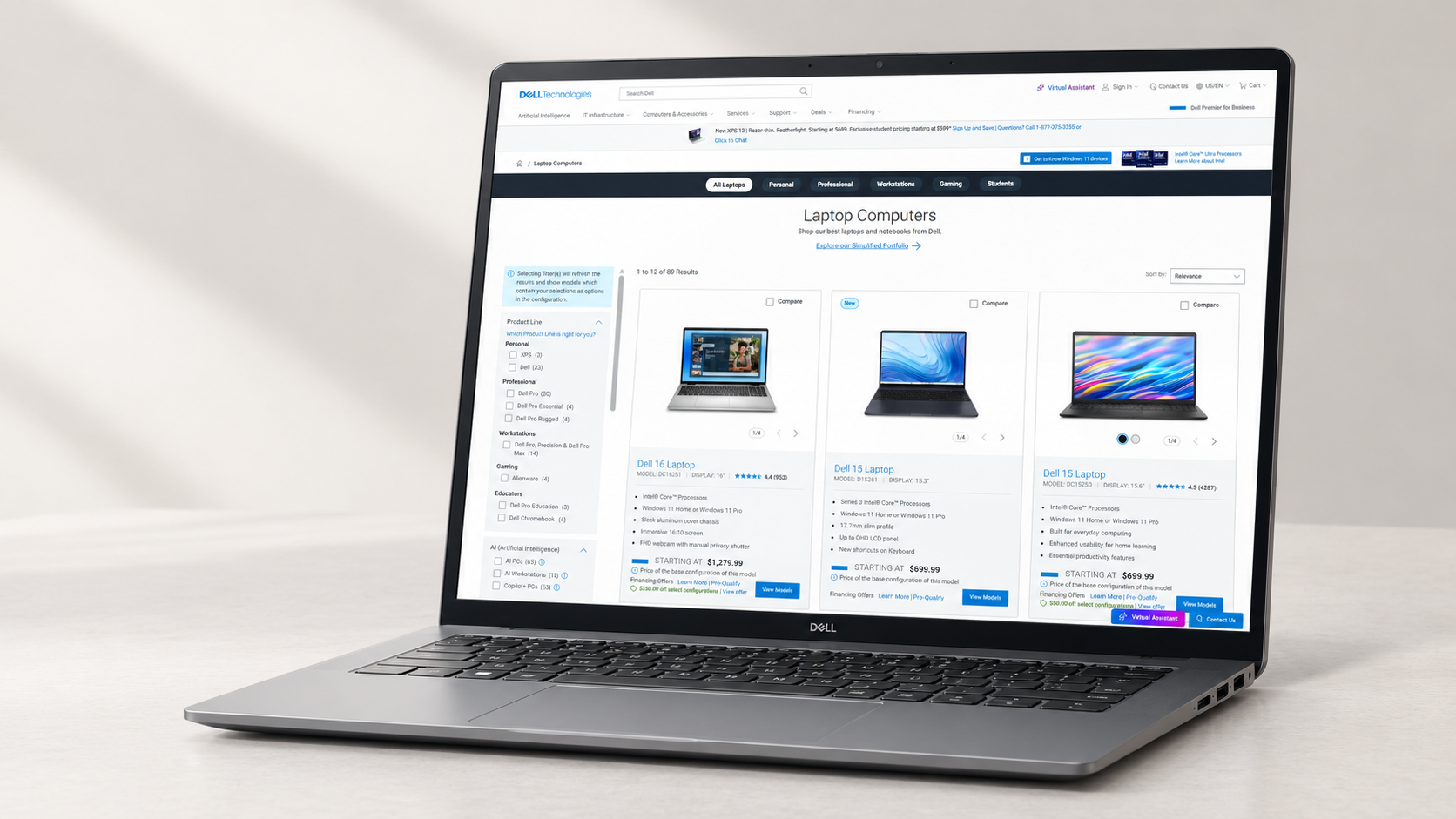
Dell Product Listing Page
Simplifying the laptop shopping journey
Role Product Design Lead
Focus Product discovery · Information architecture · UX Strategy · Research
Scope Laptop shopping experience
Approach Right-to-left design · Concept testing · A/B testing
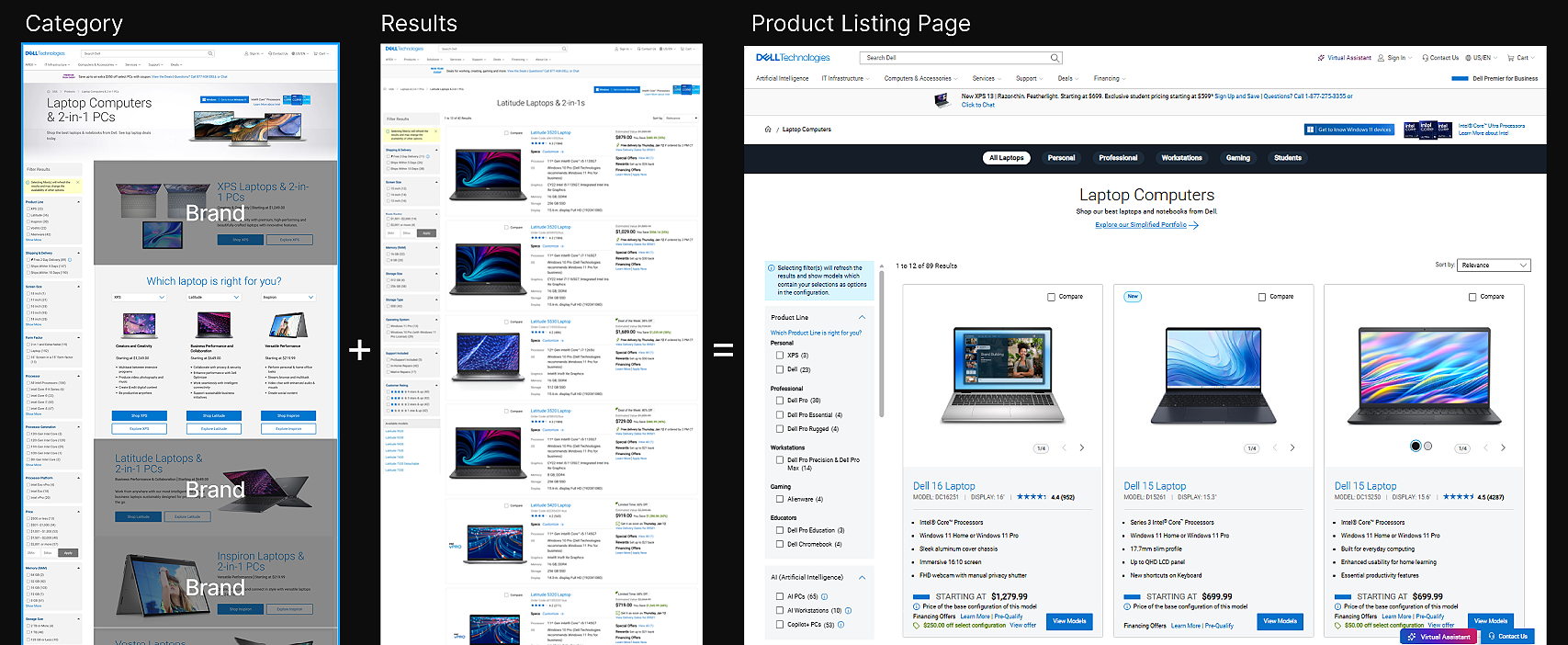
A redesign that brought Dell's category and results experiences together into a more intuitive product-discovery journey.
The Problem
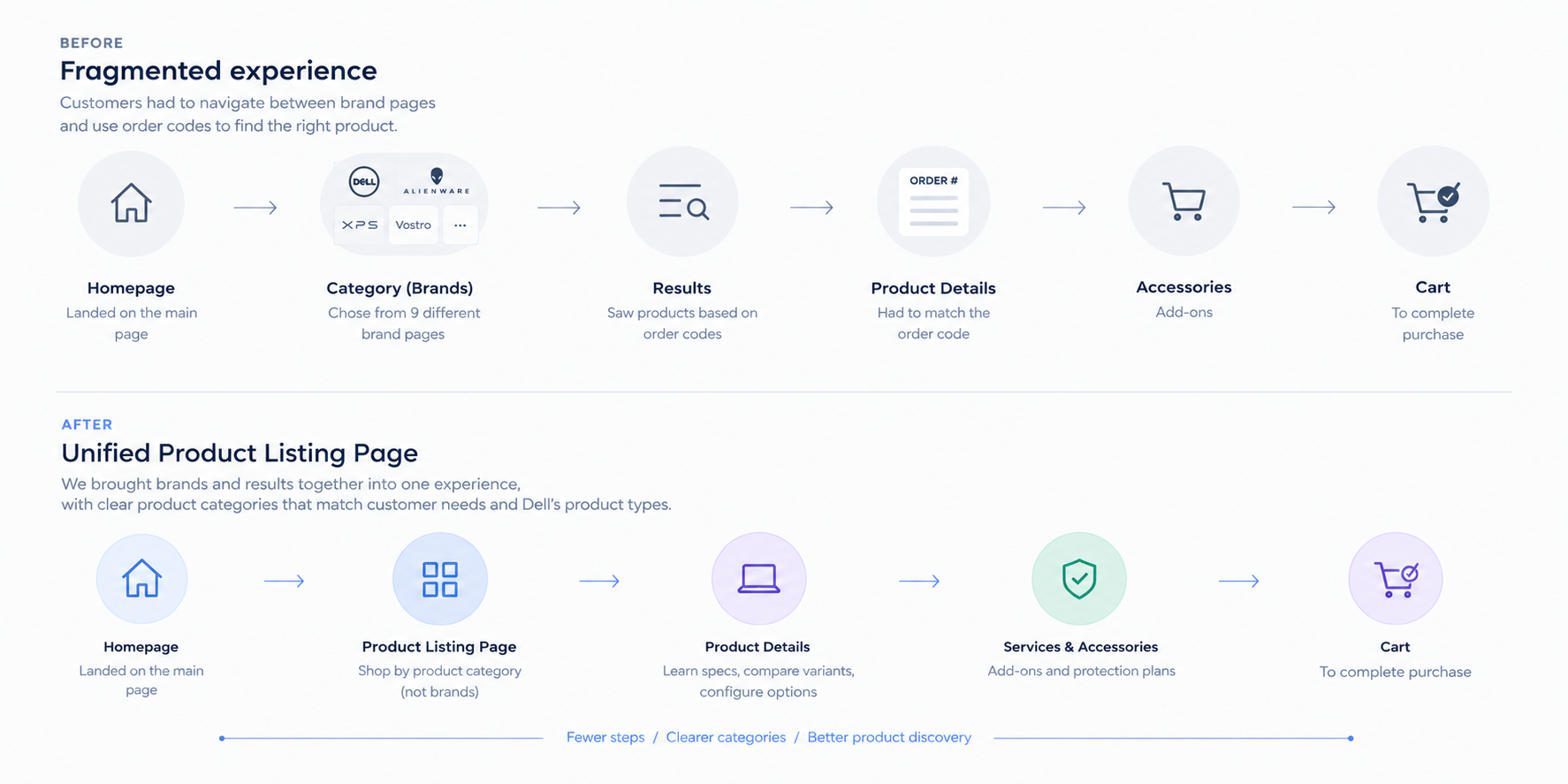
Customers shopping for PCs on a major e-commerce platform were forced to navigate a sprawling, seven-step purchase flow. From the homepage, users traveled through category pages, results pages, product detail pages, services configuration, accessories add-ons — and only then reached the cart.
Each step introduced friction, decision fatigue, and drop-off risk. The architecture was designed around product catalog logic, not user mental models. The result: high abandonment rates, confused customers, and lost revenue.
The core question driving this project: What if we could compress the entire configuration journey into a single, intelligent experience?
Finding the right laptop shouldn't require knowing Dell's product catalog.
Dell offered customers a wide range of laptops designed for different needs, but the shopping journey made it difficult to understand which products were relevant to them.
Users could encounter similar products across separate experiences, making it harder to:
understand the differences between product families
narrow down products based on their needs
compare options confidently
move from exploration to a specific product
The opportunity
How might we simplify product discovery so customers can quickly understand their options and find the right laptop for their needs?
This is much stronger than saying "users were confused" alone because it turns the problem into a design opportunity.
My Role
As a Product Design Lead, I helped shape the experience strategy and design direction for the PC shopping journey, collaborating with designers and cross-functional partners to explore, test, and refine the experience.
Defined experience direction and design principles
Contributed to information architecture and interaction strategy
Led / facilitated design exploration across multiple concepts
Collaborated with research and cross-functional partners
Used testing and iterative design to validate and refine solutions
Helped translate a complex product catalog into a simpler shopping experience
Design Approach
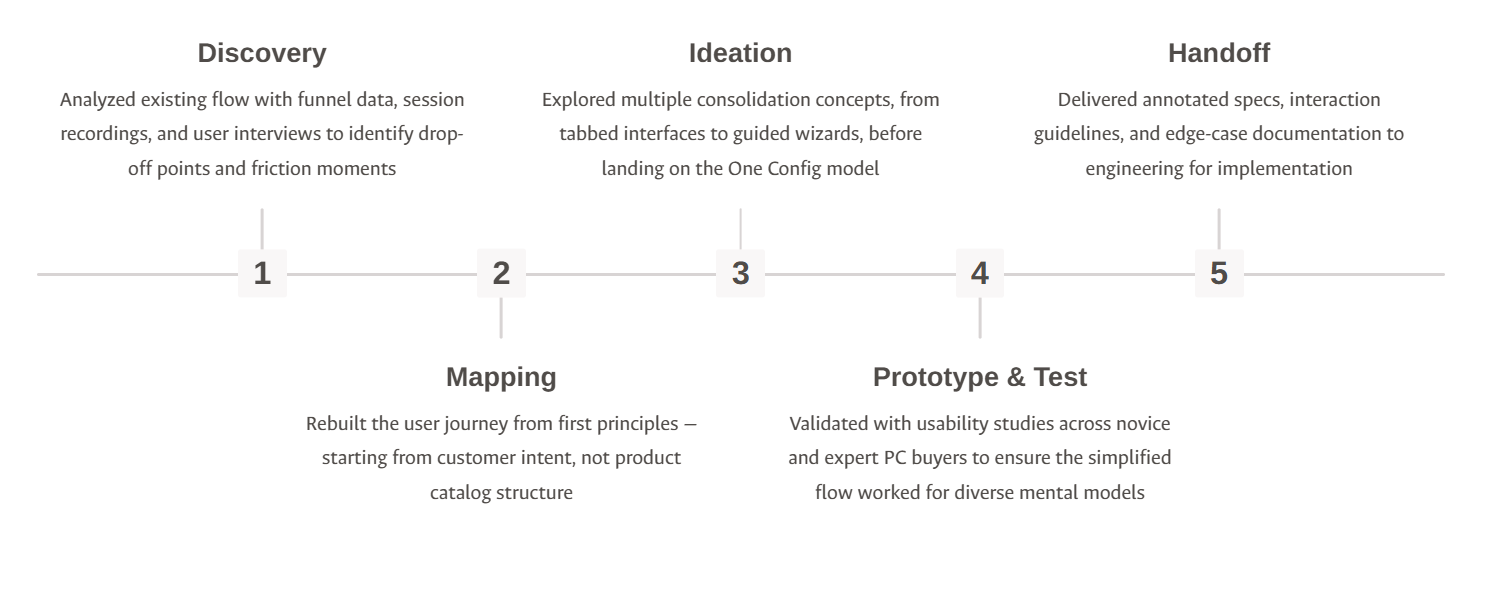
Using a right-to-left approach, we first defined the ideal shopping experience, then explored how structure, navigation, and content could support it. We combined competitive research, collaborative wireframing, concept testing, and A/B testing to explore and refine new ways to help customers discover and evaluate products.
Process & Methodology
Outcome
The work established a new direction for Dell's laptop shopping experience—bringing category discovery and product results together and creating a more cohesive path from exploration to product evaluation.
Design Principles Applied
Progressive Disclosure
Rather than overwhelming users with every option upfront, the One Config panel reveals choices progressively — guiding users through specs first, then services, then accessories in a natural reading order that mirrors how people actually think about their purchase.
Reduce Cognitive Load
Rather than overwhelming users with every option upfront, the One Config panel reveals choices progressively — guiding users through specs first, then services, then accessories in a natural reading order that mirrors how people actually think about their purchase.
Consistent Mental Model
The new flow maps directly to how users describe buying a PC: "I pick a laptop, I configure it, I buy it." Three steps in their mind. Three steps in the interface. That alignment builds trust and reduces hesitation.